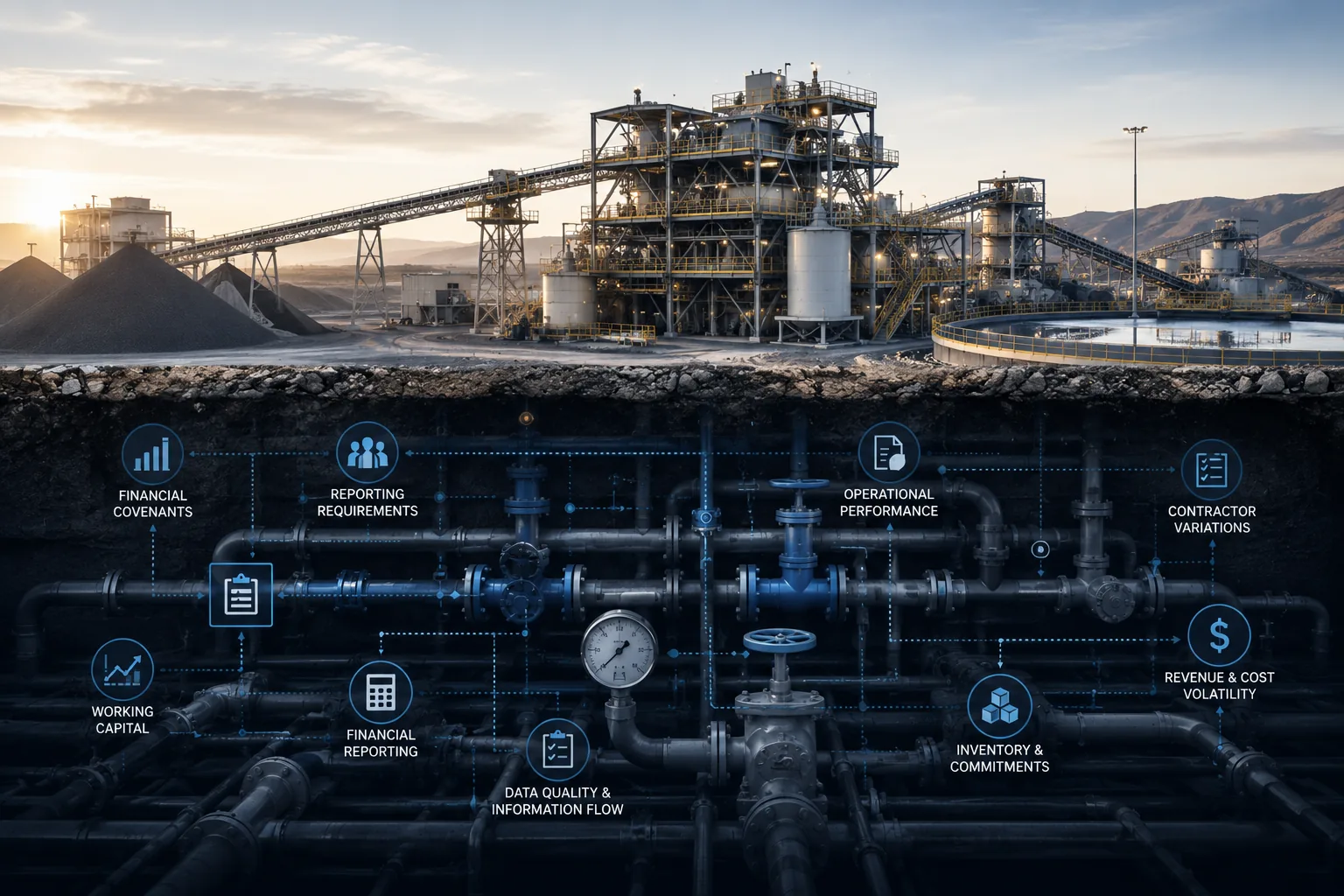
The Visible Project Is Complete. The Invisible Complexity Is Just Beginning.
Why Production Transition Is the Real Test of Governance and Capital Discipline
The project reached first production.
On time. On budget.
Construction was complete. Commissioning was progressing.
The board was pleased. Investors were optimistic.
The photographs looked impressive.
From the outside, the project had succeeded.
Six months later, a lender covenant breach notice arrived.
The asset was operating. Production had commenced. The project had not failed.
So what happened?
The answer is surprisingly common.
The visible project was complete.
The invisible complexity was just beginning.
Construction Creates Assets. Production Creates Complexity.
During construction, organisations are focused on a singular objective.
Deliver the project.
The governance model reflects that objective.
Reporting structures are clear. Decision-making pathways are well understood. Budgets are tightly controlled. Accountabilities are visible.
The organisation is largely aligned around a single outcome.
This creates a level of organisational clarity that often disappears once production begins.
Because first production does not mark the end of complexity.
It marks the beginning of a different kind of complexity.
The project company begins its transformation into an operating business.
And operating businesses are inherently more complicated than projects.
The Business Changes Faster Than Governance
As production ramps up, the organisation starts to evolve.
New contractors are engaged. Supply chains become operational. Inventory begins to move. Working capital requirements expand. Revenue cycles emerge. Commercial relationships become more dynamic. Decision-making becomes increasingly decentralised.
The organisation is no longer managing a project.
It is managing a business.
Yet in many cases, the governance structures remain largely unchanged.
The organisation continues operating with a governance model designed for a construction environment.
The assumptions that supported project delivery become progressively less effective in supporting operational complexity.
This is where risk begins to accumulate.
Not because people are making poor decisions.
Because the organisation has outgrown the framework that once served it well.
The First Visible Symptom Is Rarely the Real Problem
Governance weaknesses rarely announce themselves directly.
They usually emerge through symptoms.
A covenant breach. A contract dispute. An audit finding. A procurement issue. An unexpected working capital shock. A loss of visibility over capital commitments.
The event attracts attention. The underlying cause often remains hidden.
The symptom is investigated. The architecture that created the symptom is not.
This is why many organisations solve individual issues without reducing the underlying risk.
The problem was never the covenant.
The covenant simply revealed something that had been developing for months.
Capital Discipline Is an Organisational Capability
Capital discipline is often associated with budgets, forecasts and financial performance.
These are outputs.
The real foundation of capital discipline sits elsewhere.
Capital discipline depends upon how decisions are made. Who makes them. What information supports them. How accountability is assigned. How risk is monitored. How trade-offs are evaluated.
In other words, capital discipline depends upon governance.
When organisational complexity increases, governance must evolve alongside it.
Otherwise, the quality of decisions begins to deteriorate long before financial performance reflects the change.
Why Production Transition Is a Governance Event
Most organisations recognise production transition as an operational milestone.
Few recognise it as a governance milestone.
The transition from project to operations changes more than production profiles.
It changes the nature of the organisation itself.
The governance structures that enabled construction success must evolve into governance structures capable of supporting operational complexity.
Decision rights need to be redefined. Accountability structures need to mature. Commercial controls need to adapt. Capital allocation processes need to become more sophisticated. Visibility needs to expand beyond project metrics and into enterprise performance.
This is not an administrative exercise.
It is an organisational redesign exercise.
The Role of Commercial Architecture
This is where commercial architecture becomes critical.
Commercial architecture is the framework that connects:
- Strategy
- Governance
- Accountability
- Capital allocation
- Commercial decision-making
- Operational execution
Its purpose is not to create bureaucracy.
Its purpose is to ensure that organisational complexity remains manageable as the business evolves.
The strongest organisations do not simply scale production.
They scale decision-making capability. They scale governance maturity. They scale capital discipline. They scale accountability.
Because growth without governance eventually becomes instability.
The Hidden Risk of Success
One of the great ironies of capital-intensive industries is that governance risk often increases after success.
Construction delays attract attention. Cost overruns attract attention. Operational failures attract attention.
Success attracts celebration.
Yet success is often the point at which organisational complexity accelerates most rapidly.
The project has succeeded. The business begins to grow. New opportunities emerge. New commitments are made. New risks appear.
The governance model that delivered the project is suddenly supporting an organisation it was never designed to govern.
This is the hidden risk of success.
Final Thought
Most organisations spend years planning how to build the asset.
Far fewer spend time redesigning how the organisation must operate once the asset is built.
Yet this is often where the greatest governance challenge emerges.
The visible project is complete.
The invisible complexity is just beginning.
The organisations that navigate production transition successfully are not necessarily those with the best assets.
They are the organisations that recognise governance as a dynamic capability rather than a static framework.
Because construction tests engineering capability.
Production tests organisational capability.
And capital discipline ultimately depends on the ability of governance to evolve as complexity grows.